
CHANEL WITHOUT A FACE
By Thea Elle · March 2, 2026· Luxury Industrial ComplexA family saga in three acts: talent, capital, and the quiet machinery that outlives them both.
It is tempting to tell CHANEL as a romance: a woman, a style, a perfume that changed the century.
And in many ways, it was.
Gabrielle Chanel was a rare force—intuitive, disciplined, self-made. She understood line, comfort, and the psychology of modern women before the word “modern” had fully settled into fashion. She turned jersey into elegance, loosened the body from corsets, and gave women a way to move through the world that felt both effortless and composed.
But the story also requires a wider lens.
Chanel was not only a designer. She was also a strategist, a survivor, and at times a deeply complicated figure whose choices—especially during the occupation—continue to cast a shadow over her legacy.
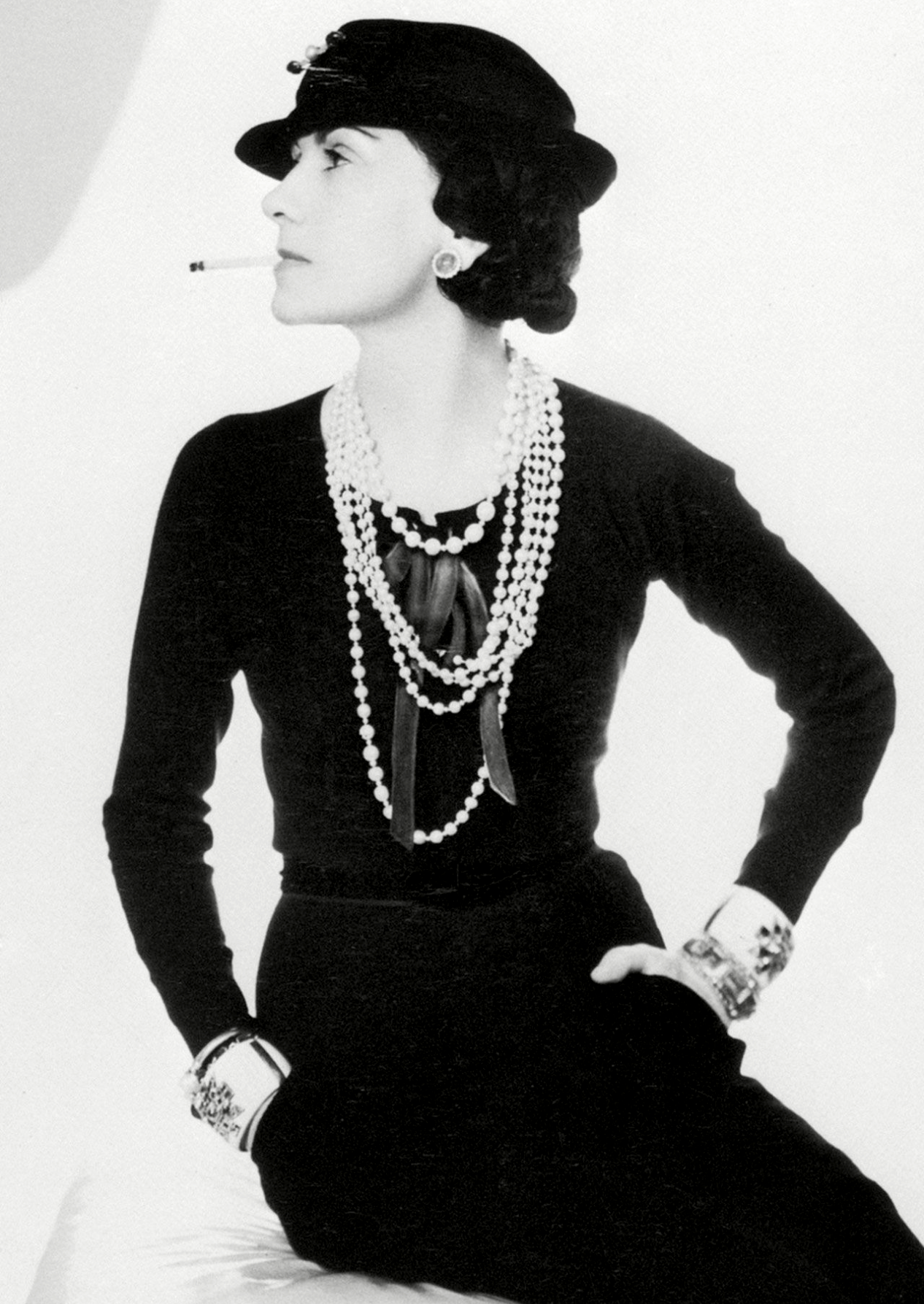
Coco Chanel: radical eye, ruthless instinct. She rewrote how women dressed—and spent the rest of her life trying to reclaim the business she had already given away.
The truer story reads closer to Buddenbrooks with a Bloomberg terminal humming in the next room. Families, contracts, exile, a war, a return. And, underneath it all, a structure that converts desire into value with almost uncanny consistency.
This is a story about a name—and the people who learned how to carry it forward.
I. The arrangement (1924): Authorship Meets Capital
When Coco Chanel turned her attention to perfume, she was already shaping culture. But perfume required an industrial infrastructure that couture could not provide.
Pierre and Paul Wertheimer understood scale. Chanel understood the product and the mythology. Théophile Bader bridged the retail world.
The agreement they reached was stark: roughly 70% to the Wertheimers, about 20% to Bader, and around 10% to Chanel herself.
It was a practical decision, and in the moment it made sense. It allowed Chanel No. 5 to become what it became.
But it also set the dynamic that would define the house for the next century: authorship on one side, ownership on the other.
II. War, exile, and a difficult chapter
History rarely offers clean narratives, and Chanel’s life is no exception.
The Wertheimers, who were Jewish, left France ahead of the occupation and protected their business interests abroad. Chanel remained in Paris, navigating a complex and morally fraught environment, including a relationship with a German officer and attempts—ultimately unsuccessful—to use wartime legal structures to regain control of her perfume company.
These years remain the most difficult to reconcile. They sit in tension with the elegance and clarity of the work she created.
And yet the structure held. The Wertheimers returned after the war with ownership intact, and the company continued.
Make an icon yours.
Shop Preloved Luxe now.
III. A return, quietly financed
In 1954, at seventy, Chanel returned to fashion.
It is often remembered as a personal triumph. It was also a financial one made possible by the very family she had once opposed.
The Wertheimers funded the relaunch, absorbed the risk, and allowed Chanel to step back into the cultural space she had once defined. Over time, the company became fully consolidated under their control, while Chanel herself was supported for life.
The arrangement was not romantic. It was stable. And it worked.
IV. The hire that reset the narrative (1983)
In 1983, the third generation made the decision that rewrote perception: they hired Karl Lagerfeld. He didn’t reinvent Chanel so much as translate it for a new era.
Lagerfeld was not a couturier in the purist sense. He did not build his legend cutting patterns in silence like Azzedine Alaïa, nor did he operate as a conceptual insurgent like Rei Kawakubo or Yohji Yamamoto. He did something more slippery and, in the end, more consequential: he decoded CHANEL as a language and treated it like a system of signs.
Camellia, chain, quilt, black-and-white, pearls, tweed, the double-C.
He didn’t invent them. He re-edited them—season after season, faster than anyone else in the industry could process—until they behaved like pop culture rather than heritage.
If Coco Chanel authored the alphabet, Lagerfeld wrote the daily newspaper.
This is why he confounded critics. Some argued—famously, sometimes bluntly—that he was “overrated” as a designer because he did not introduce a radically new silhouette. They were not entirely wrong. He was not trying to redraw the body. He was trying to program the brand.
Barbara Vinken called him, as early as the 1980s, a postmodern designer. That diagnosis has aged well. Lagerfeld treated CHANEL as a ready-made archive, sampling it, remixing it, amplifying it. He anticipated what fashion would become in the age of images: referential, fast, self-aware, endlessly recyclable.
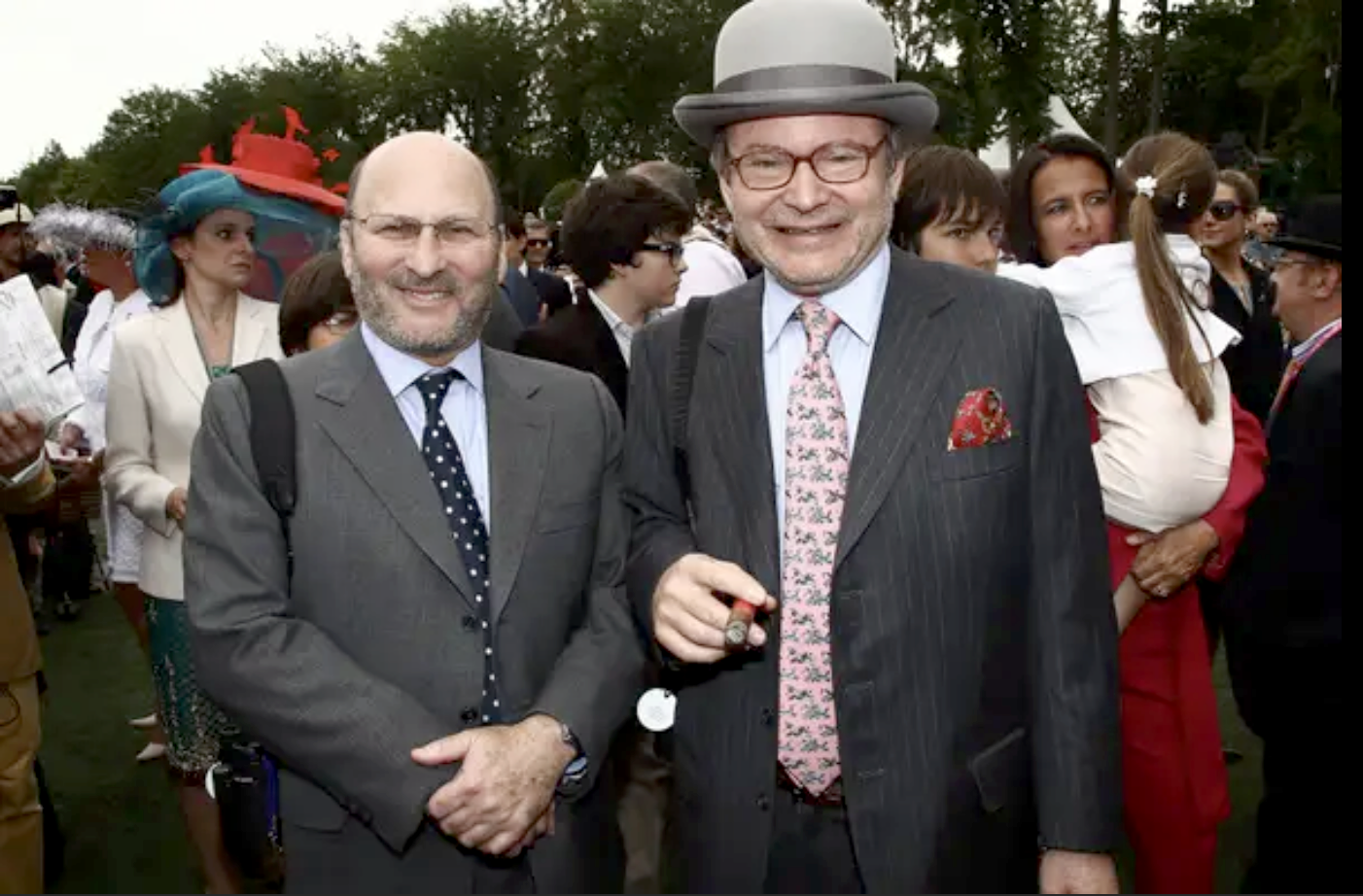
Alain and Gérard Wertheimer. While the world looked at Coco and Karl, the Wertheimers kept the machinery intact—ownership, continuity, and the quiet discipline that outlives every silhouette.
And he understood something most designers resist admitting: n a global luxury house, consistency is more valuable than originality.
He was also a character—sometimes dazzling, sometimes exasperating, often both in the same sentence. Lagerfeld’s wit was surgical and frequently reckless. He made enemies easily: critics, celebrities, public figures. His offhand comments about bodies, age, royalty, and politics triggered repeated outrage cycles, apologies, and non-apologies. He could be described—depending on who you asked—as a “petty dictator” running an empire of images, or as a brilliantly disciplined editor who knew exactly how far he could push before the system pushed back.
He liked aphorisms. He distrusted nostalgia. He once remarked that people like jeans because “you can wear them dirty”—a line that says more about his view of modern fashion than any manifesto.
Inside CHANEL, however, the arrangement was perfectly calibrated:
Lagerfeld had total visibility. The Wertheimers kept total control.
He became the house’s public intelligence—the voice, the silhouette, the daily proof that the brand was alive. They remained the infrastructure—the contracts, the capital, the continuity.
Ownership did not change. Equity did not change. Control did not change. What changed was the narrative velocity and the story people told themselves when they bought the bag.
Curated Finds. Timeless Style,
Thoughtfully Preloved.
V. The present tense: opacity as a strategy
Today, CHANEL is privately held by the Wertheimer family—primarily the brothers Alain Wertheimer and Gérard Wertheimer, descendants of Pierre and Paul. Revenues are widely estimated in the tens of billions annually; margins are enviable; the balance sheet is quiet.
No IPO. No activist investors. No quarterly theater.
The company publishes less than its peers. It explains less than its peers. It apologizes less than its peers. Silence, in this context, is not absence. It is policy.
The family’s personal lives mirror that stance. Alain, often described as media-averse, splits time between Europe and the U.S., and has long been associated with horse racing and breeding. Gérard is similarly private. The family’s philanthropic footprint exists—support for the arts, cultural institutions, and social causes through foundations and discreet patronage—but it is not performed as a brand campaign. Even their philanthropic style feels like the business: controlled, unadvertised, continuous.
It is difficult to turn that into a press narrative. It is even harder to turn it into a scandal.
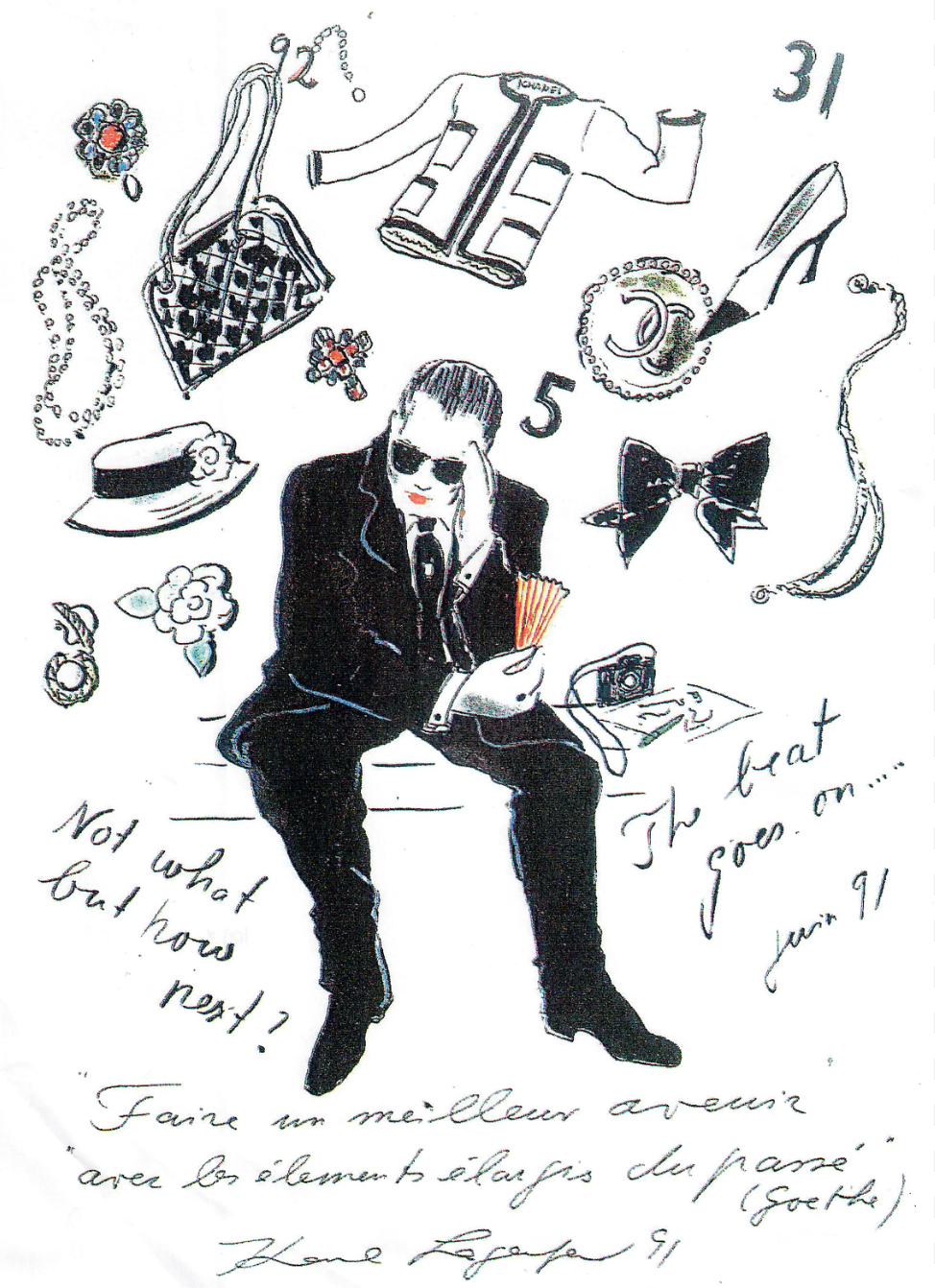
Karl Lagerfeld, editor-in-chief of the archive. He didn’t invent CHANEL’s language—he remixed it into a global dialect: camellia, chain, tweed, double C. The codes stayed. The velocity changed.
VI. The house without a face
Fashion often revolves around faces—founders, muses, creative directors, and ambassadors.
CHANEL appears to be one of those houses. But at its core, it is something else.
It is a continuity of codes, carried by different hands over time. The quilt, the chain, the camellia, the jacket—each one familiar, each one reinterpreted, each one quietly anchored by ownership that never shifted.
To call these objects “designer bags” is almost too simple. They are objects of memory, passed through decades, reissued, revalued, and re-loved.
Which is perhaps why they feel so at home on a platform like preloved.luxe.
The face changes. The style evolves. The stories accumulate. But the structure—quietly, steadily—remains.
Editorial Luxury Awaits